
How a ‘center-right’ KY Republican became the center of power in Frankfort
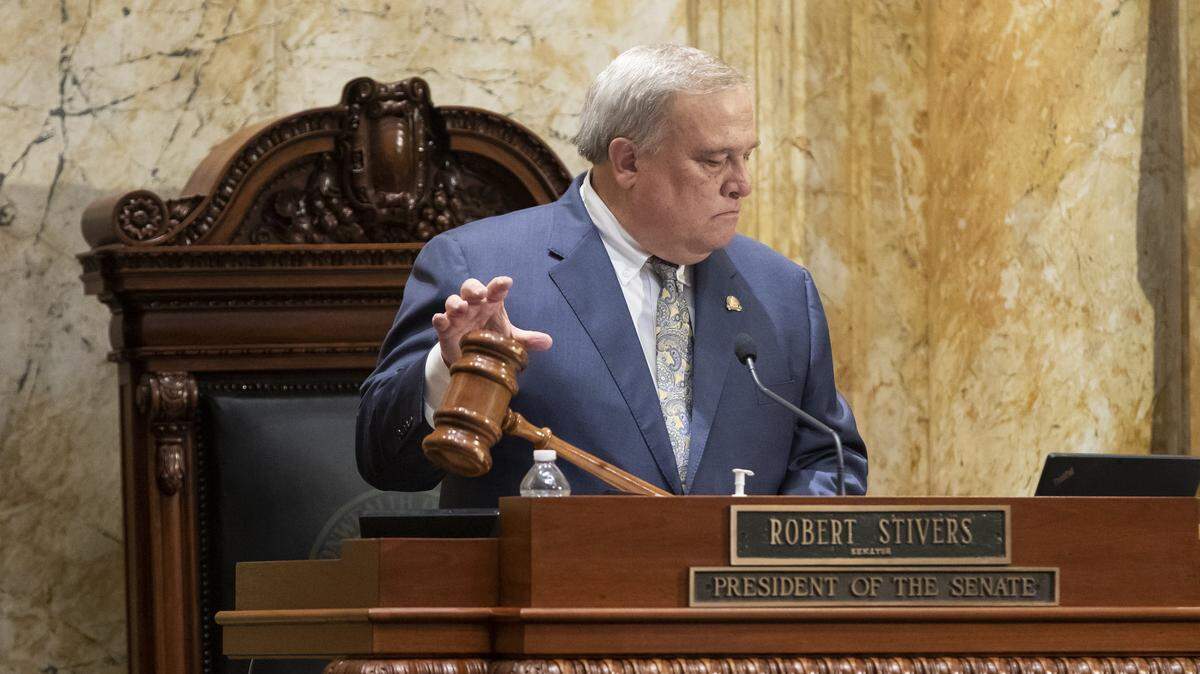
Kentucky Senate Republicans had a political hot potato in their possession.
Late in the 2024 General Assembly, some in the caucus were clamoring to pass a bill banning diversity, equity and inclusion practices in public higher education, part of a national trend on the right. But other Republicans, like former Sen. Whitney Westerfield, were uncomfortable with the bill.
Westerfield recalled that he and Sen. Lindsey Tichenor, a first-term social conservative from Oldham County, were arguing during a closed-door caucus meeting when Senate President Robert Stivers spoke up.
He didn’t scold or make demands of his colleagues. Instead, he reminded them of the issues where they agree.
“He said, ‘Whitney, you’re pro-life. Lindsey, you’re pro-life. Whitney, you believe in traditional marriage. Lindsey, you believe in that. You guys probably agree on 90% of the things that make up our platform,’” Westerfield recalled.
“It was a peacemaker moment,” Westerfield said. “He wasn’t trying to drive a wedge, and he wasn’t actually trying to drive the debate.”
Stivers defused a tense situation. The anti-DEI bill died that session, aligning with the majority of GOP senators’ wishes. When it returned in 2025, a similar bill received easy passage.
Moments like that have defined Stivers’ 12-plus years at the helm of the Senate GOP, according to friends and colleagues. He is somebody who wants everyone to get along, and his ability to make that happen has lifted him to great heights.
In November, Stivers, 64, became Kentucky’s longest-serving Senate President. He has shepherded some of the most meteoric policy and political shifts in Kentucky history during that tenure.
Stivers has grown the Senate GOP into Kentucky’s most dominant political caucus since the 1800s. There are currently 32 Republicans to only six Democrats.
With the help of a GOP-controlled House since 2017, his caucus has seen through a near-total ban on abortions, put the state on a path to cut its personal income tax altogether, instituted “right to work” anti-union laws, limited Kentucky youths’ access to transgender care and taken full control of the state’s multi-billion dollar annual budget.
In the 2026 legislative session, Stivers will be at the wheel for major political and policy decisions. He and his staff have warned against the push from some GOP colleagues both to cut the income tax this year and to redistrict out Kentucky’s lone Democrat in Congress.
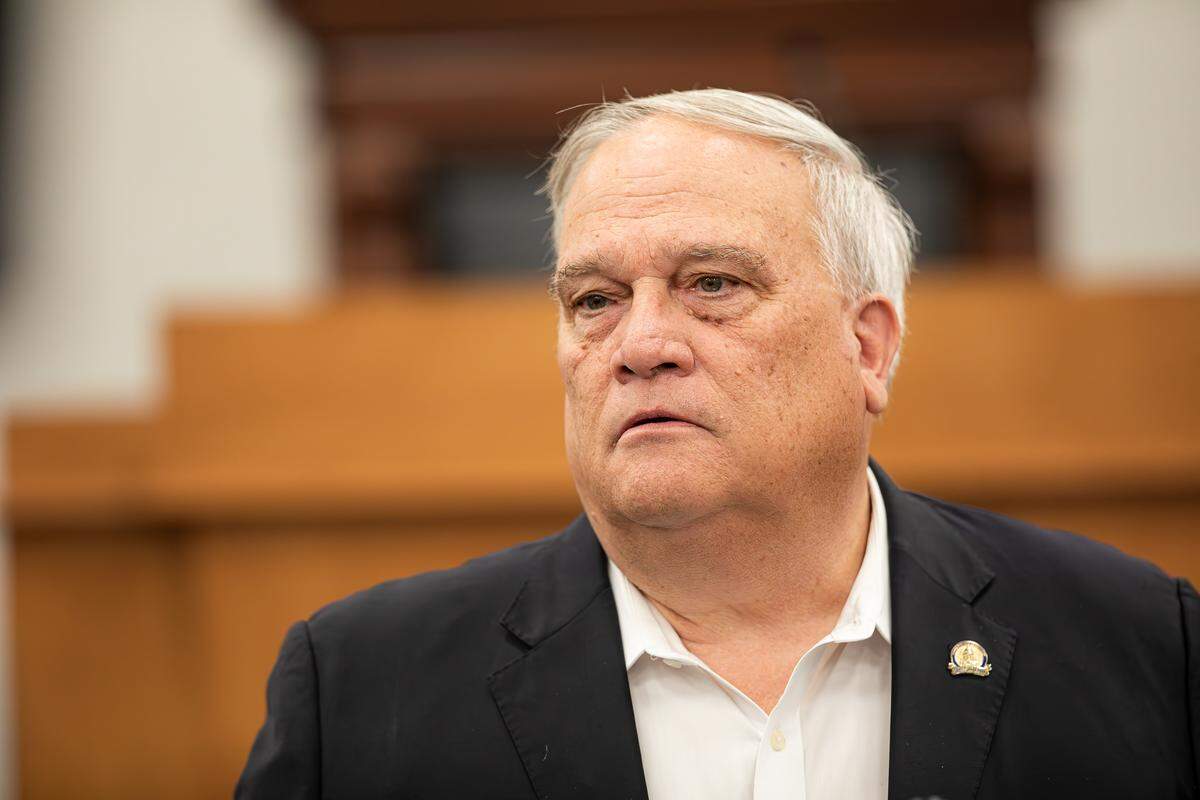
Most of Stivers’ work to reshape the state has taken place under the nose of a Democratic governor, Andy Beshear.
With lawmakers continually reducing Beshear’s authority, some would argue that Stivers’ position gives him even more power than Beshear.
“There’s no question,” said lobbyist Abby Piper, of the firm Piper-Smith. “It’s obviously Stivers.”
In some ways, Stivers said the decisions he and his caucus make have a greater impact on Kentuckians than the state’s members of Congress. That Senate GOP caucus, alongside its House counterpart, controls the lion’s share of the state’s wealth and fiscal direction. The state’s biennial budget totals more than $30 billion.
“We’re by far more impactful on a day-to-day basis,” Stivers said. “The federal delegation, do they impact school curriculum or school days? That’s virtually the biggest employer here in every county. Are they the ones that build roads in the state of Kentucky?”
Kentucky’s answers to those issues most often align with Stivers’ priorities.
“Ninety-nine percent of the time, what came out of that caucus and that leadership group was what Robert Stivers wanted to have happen,” former Senate GOP Floor Leader Damon Thayer said.
Stivers is also seen by many in the state GOP as the party’s next top power broker — someone to fill the influence vacuum when Sen. Mitch McConnell retires from the U.S. Senate.
This comes as Stivers, a self-avowed “center right” conservative, contrasts with the growing influence of far right conservative movements in the statehouse, and has been unafraid to stand against popular national GOP initiatives. That seems to be the case with the recent redistricting push.
With President Donald Trump pushing states to redraw maps to advantage Republicans — prompting Democrats to respond in kind — some Republicans in Kentucky have raised the possibility of drawing out Louisville Rep. Morgan McGarvey, the state’s lone Democrat in Congress. Stivers appears to be no fan, with a spokesperson stating the odds are “slim-to-none.”
Given how recent history has played out, it’s hard to bet against that prediction.
A powerful perch
Stivers hasn’t had to worry much about political challenges back home in Eastern Kentucky.
His parents were prominent. Stivers’ father, Bertram, was a country lawyer turned circuit judge, and his mother, Joan, moved to Clay County from Western Massachusetts, Harvard public health degree in hand, to pursue a career in the field. She ended up working for several years at Sue Bennett College, a junior college in London that shuttered in the late 1990s, and served as its president at one point.
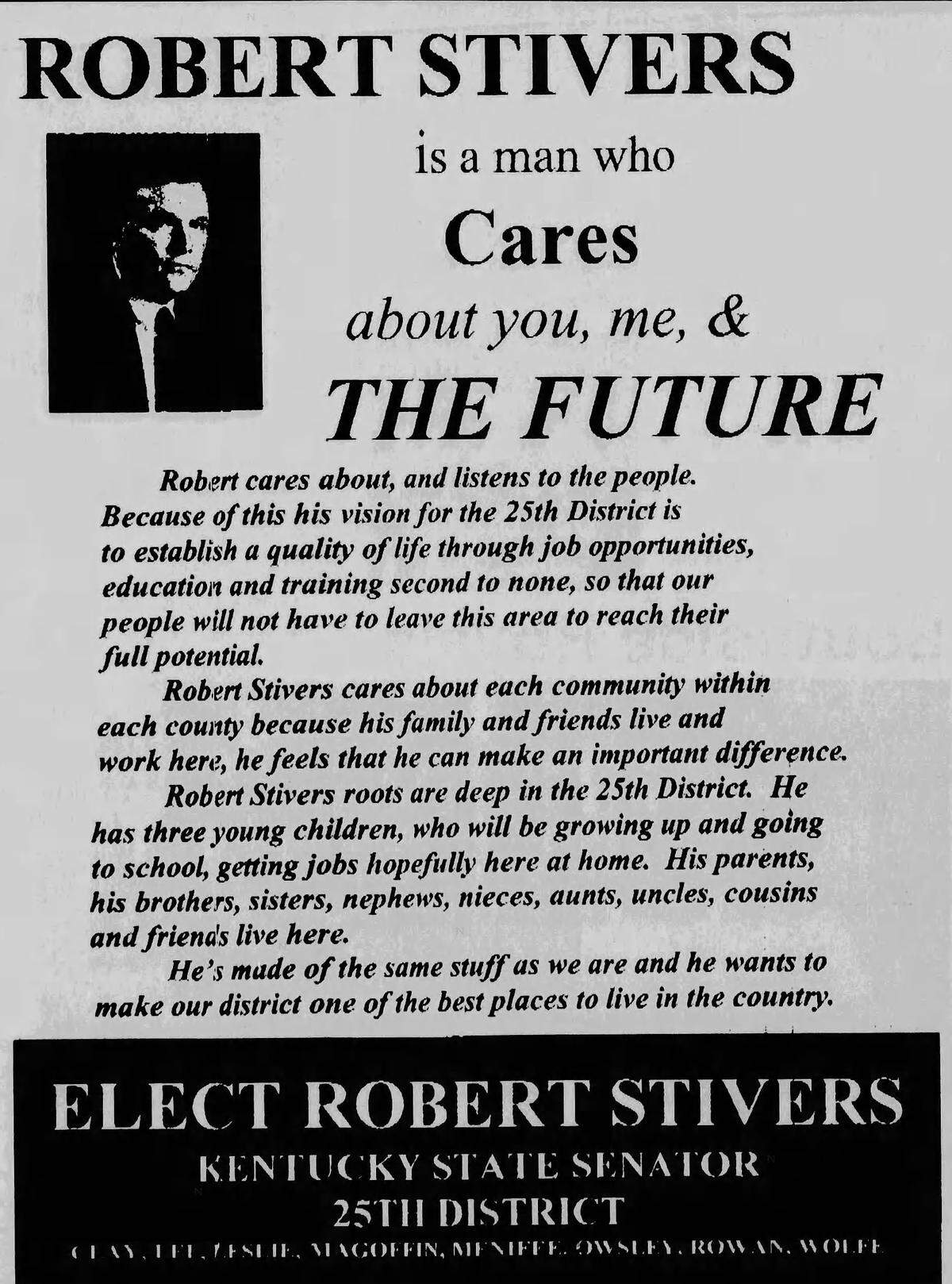
After his first election in 1996 — “he’s made of the same stuff as we are,” a newspaper ad from the time reads — he has not faced much in the way of serious opposition from Democrats or Republicans. That’s afforded him time to focus on the politics and personalities of Frankfort.
“He has the unique ability to listen to people, to respect the positions they want to take,” said Ellen Williams, former state GOP chair and close friend.
Her case in point: Sen. Aaron Reed, R-Shelbyville, came into the GOP nomination in 2024 despite Stivers and the caucus backing a challenger seen as more friendly to leadership. After winning, Reed boasted he didn’t “owe them anything,” in a reference to leadership.
Yet Stivers embraced Reed. He granted him extra days to come into the Capitol to absorb as much as he could. The Navy SEAL veteran was later named vice chair of the Senate Committee on Veterans, Military Affairs and Public Protection.
“He doesn’t shy away when he does something that maybe doesn’t work out best for him,” Williams said. “He doesn’t get angry, he doesn’t attack. He says, ‘You know, well, that’s just how it was.’”
Stivers’ personal relationships with the now-32 GOP members he leads is strong. He’s considered a trusted confidant to many, even though he’s the most powerful person in the room.
“He gets to know his members, and frankly a lot of his members confide in him,” Westerfield said. “He ends up becoming, whether people know it or not, a repository of information about what the caucus is thinking.”
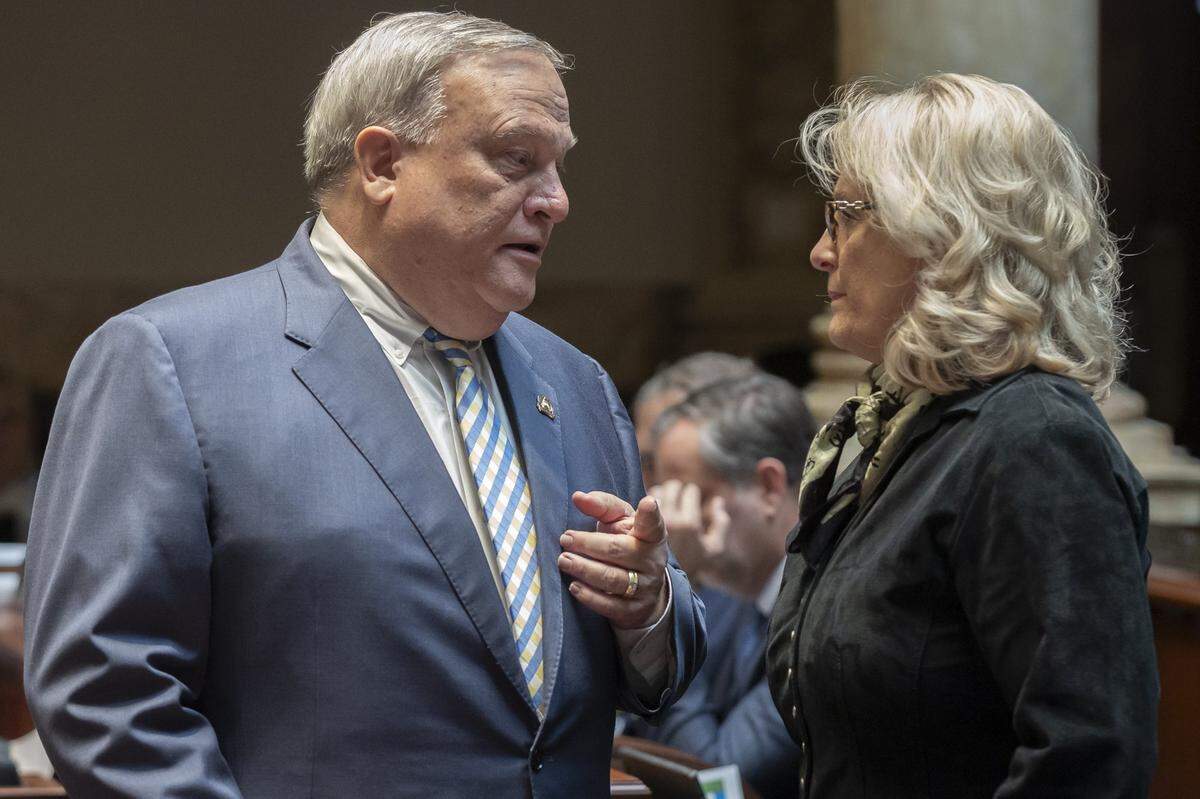
Even his detractors give him credit for his longevity in an often cutthroat environment.
Another senate contender that Stivers and members of GOP leadership didn’t back is Andrew Cooperrider, a conservative activist whom leadership spent hundreds of thousands to defeat in a 2022 primary. He thinks little of Stivers’ politics, but admits his maneuvering has helped him remain in his perch.
“He’s a very tactful thinker who’s not trying to grab headlines; he’s just trying to stay in power,” Cooperrider said.
A ‘Mountain Republican’
Ask Stivers about his greatest achievements as president and the exclusions are as notable as the inclusions.
Some bills you don’t hear: the bill blocking transgender minors from accessing health care related to their gender transition; the bill banning DEI concepts in higher education; the bill that effectively banned abortions in Kentucky; or the bill increasing criminal penalties for behavior associated with homelessness.
Those were the most debated, attention-grabbing proposals of their respective sessions. Stivers voted for all of these bills, but his “greatest hits” are all related to economic development.
David Williams, the previous GOP senate president, described Stivers’ brand of Republicanism using three terms that all hinted at the same concept: a “Prosperity Republican,” a “Mountain Republican” and a “Hal Rogers Republican.”
Rogers, the longest continuously-serving member of the U.S. House, is known for his penchant for government spending. Federal government programs are vital to the sparsely populated Eastern Kentucky region Stivers and Rogers represent.
“They don’t hate government,” Williams said. “He’s socially conservative, but he has a lot of people in need. He’s friendly with teachers. He comes from an area that needs government largesse.”
.JPG "0119COUCHmdp3 (1).JPG")
His region also needs to protect the industries it has.
This is the posture Stivers has taken when it comes to coal, even though mining jobs in Kentucky continue to drop, and coal mines employ about 120 of his 121,000 constituents.
Some scratched their heads at Stivers’ strong advocacy for a bill phasing out the property tax on bourbon barrels. The tax is a lifeline for local governments like Marion County and Anderson County, home to Maker’s Mark and Wild Turkey, respectively.
But barrels are good business for Manchester.
“People ask why I was so interested in the bourbon industry: I’ve got 50 people who work in the bourbon industry here doing white oak staves,” Stivers said.
For Clay County, population of roughly 20,000, those 50 jobs at Speyside Cooperage are a big deal.
The Senate leader’s stances on a variety of other issues are also informed by his local and personal experiences.
Why did he back the Senate’s last-minute insertion of a work requirement to the state Medicaid program last year? He initially cited his local Pizza Hut’s inability to open its dining room.
“They could not open the dining room because they didn’t have people who were willing to work. ... People are staying at home because the benefits are so rich it’s a disincentive to work,” he said on the Senate floor after the bill’s passage.

Stivers’ focus on incentives has driven some on his right flank to madness. Cooperrider sees a Republican General Assembly that should be, in his opinion, slashing spending in libertarian fashion. That’s not what’s happening, as state spending — often due to increased obligatory spending like pension contributions and Medicaid — continues to increase year-over-year.
“He’s a typical tax and spend neoconservative, and that’s why he doesn’t particularly care about spending like a drunken sailor,” Cooperrider said.
Cooperrider has been a particular hawk on state incentives for two massive electric vehicle battery plants in Bowling Green and Elizabethtown, totalling a combined $367 million. The latter project ended in 1,600 layoffs and a change in mission; the former also had a rough 2025.
Stivers, who’s bullish on the burgeoning industry of data centers to power artificial intelligence and takes credit for recently passed incentives to attract them, said that he’ll keep looking to attract major industries to the state.
“There’s a series of things that can really help the trajectory of people that we’re working on. My comment is: I know I’m going to bait my hook and throw it out in the water. There’s no guarantee that I’m going to catch a fish, but unless I do bait my hook and throw it in out in the water, I’ll never have a chance — they don’t jump in the boat or jump on the bank,” Stivers said.
On social issues
Stivers sees his focus on the economy as less of a binary choice — legislating money over morality — and more of a complement.
Some Democrats see a man unconcerned, and maybe even quietly at odds, with the social agenda of his caucus.
That’s what Sen. Karen Berg, D-Louisville, picks up from Stivers when she speaks about her late son Henry, a transgender activist who died by suicide months before the state legislature passed a bill banning Kentucky minors from accessing gender-affirming care in 2023.
“I know that story affects Robert. There’s no doubt about it. He looks away when I talk about it,” Berg said.
She thinks she and Stivers are more alike than people might think on matters of policy, perspective and worldliness. Neither of them, she said, think legislation targeting LGBTQ people deserves as much time as it’s been given.
“I don’t think Robert really cares about any of that stuff, and I think he wishes we weren’t dealing with it,” Berg said. “I know, unequivocally, that the breadth of his personal, social experiences have shown him that this is not the problem.”
When asked about this perception, Stivers leaned on his stance that a healthy economic landscape could “cure” social issues.
“If you provide for people — and I don’t care what people they are — then some of your social issues don’t seem to be as relevant,” Stivers said.
“I think you cure more of the social ills and woes of the society by creating educational and economic opportunities. People’s differences aren’t as pronounced, nor are they as prickly, when everybody is doing well.”
Still, Stivers was an advocate for the bill in question when it passed the Senate.
For progressive observers like Robert Kahne, a Louisville Democrat who hosts the political-themed “My Old Kentucky Podcast,” Stivers’ rhetorical moderation means little if he’s caving to the far right elements in his caucus to stay in power.
“The things that they’re accomplishing that he doesn’t care about, that so many of the rest of us do, are horrendous,” Kahne said, citing the 2023 bill and a 2024 bill increasing penalties for the homeless. “He just feels like he needs to get it done as a leader because he has other people in his caucus that want to get it done.”
That doesn’t mean Berg disrespects Stivers or thinks he’s a phony. In fact, she’s grateful he’s got the president’s gavel.
“Better him than some of the other guys,” Berg said.
Beshear relationship
Stivers and Beshear’s father, former Gov. Steve Beshear, often worked together. Stivers called their relationship at the end of the elder Beshear’s governor’s term and the beginning of his time leading the Senate “very good, very honorable and honest.”
Not so with the younger Beshear, he said.
.JPG "120320schlopen_318 (1).JPG")
“I don’t think that, being very candid, the current governor really looked to do that, nor do I believe he really wanted to try to do that. Did I hope it would be more like the Steve Beshear scenario? Without a doubt,” Stivers said.
In Stivers’ telling, prospects for a strong working relationship soured just months into Beshear’s tenure in the early days of the COVID-19 pandemic. The issue wasn’t related to restrictions, which were a common complaint among conservatives during that time.
Instead, it was about power.
When Beshear asked for the legislature to adjourn due to the pandemic, Stivers and House Speaker David Osborne, R-Prospect, said they would do so if Beshear called a special session, and they adjourned until a specific date in a month or two “when we kind of understand this better.”
Beshear said no.
“It was like, wait a minute, you just want to run the whole government without any influence of the legislature? We’re not going home, then. We’re not going to adjourn; we’ll stay here,” Stivers said.
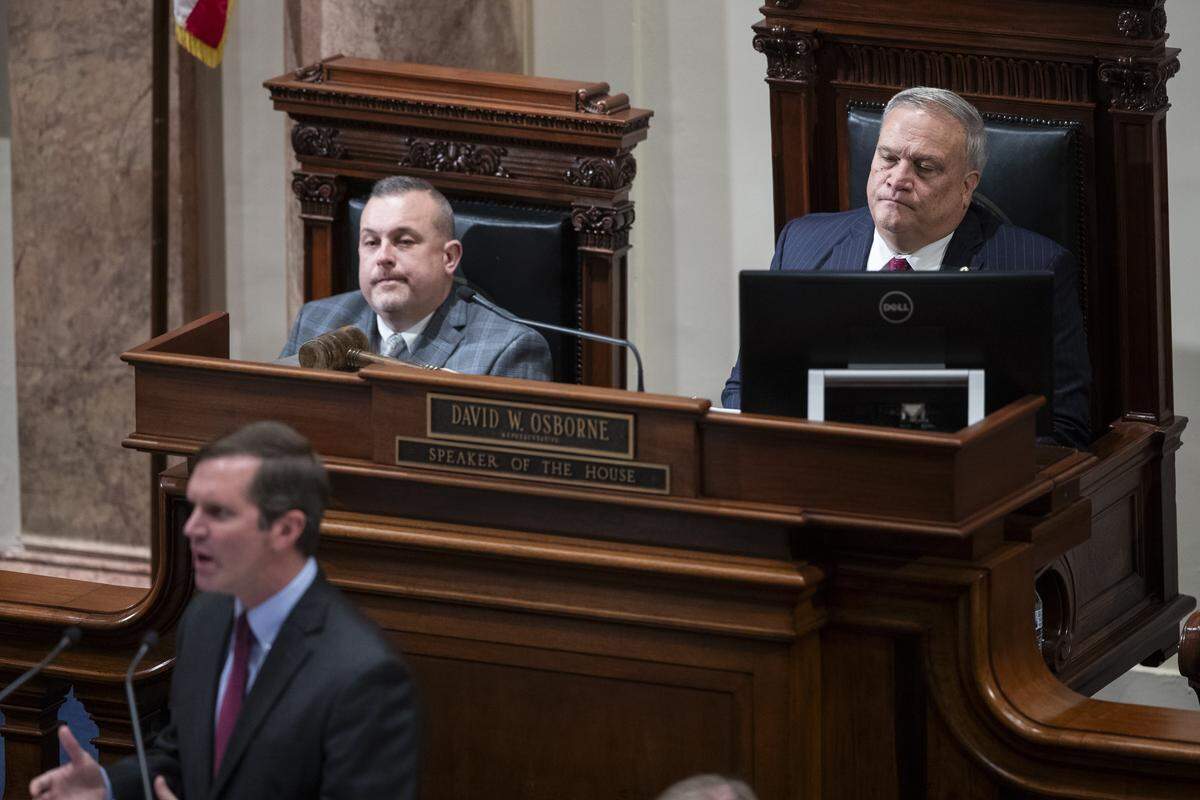
Since then, Beshear and Stivers have aligned on matters of economic development, like providing incentives for major economic projects.
Beyond that, the legislature has mostly cut Beshear off from much meaningful influence on the laws of the commonwealth. They’ve overridden almost all his vetoes, and they started proposing their own budget before his, giving it little thought and adding insult to injury by breaking a long-standing tradition.
A spokesperson for Beshear declined to respond to Stivers’ comments.
Stivers doesn’t think much of Beshear’s political prospects. When asked about Beshear’s potential 2028 presidential run, he held up two hands, gesturing that Beshear was on one and a snowball was on the other.
“In hell,” Stivers said, “a snowball would have a better chance.”
Stivers’ private legal work
When he’s not working in his Senate president capacity, Stivers occupies a desk in his law office — a converted house on Manchester’s Main Street.
Some of his work is typical country lawyer fare: estates and wills, land disputes, divorces.
But at least one of his clients is embroiled in controversy.
Stivers confirmed to the Herald-Leader he has had a contract with Addiction Recovery Care, the massive addiction treatment nonprofit that is being investigated by the FBI for Medicaid fraud. The state plays a major role in designing the rules and regulations around the federal- and state-funded health insurance program.
Stivers provided legal work for the outfit as it rocketed to dominance in the state, expanding well beyond its Eastern Kentucky footprint before the investigation began.
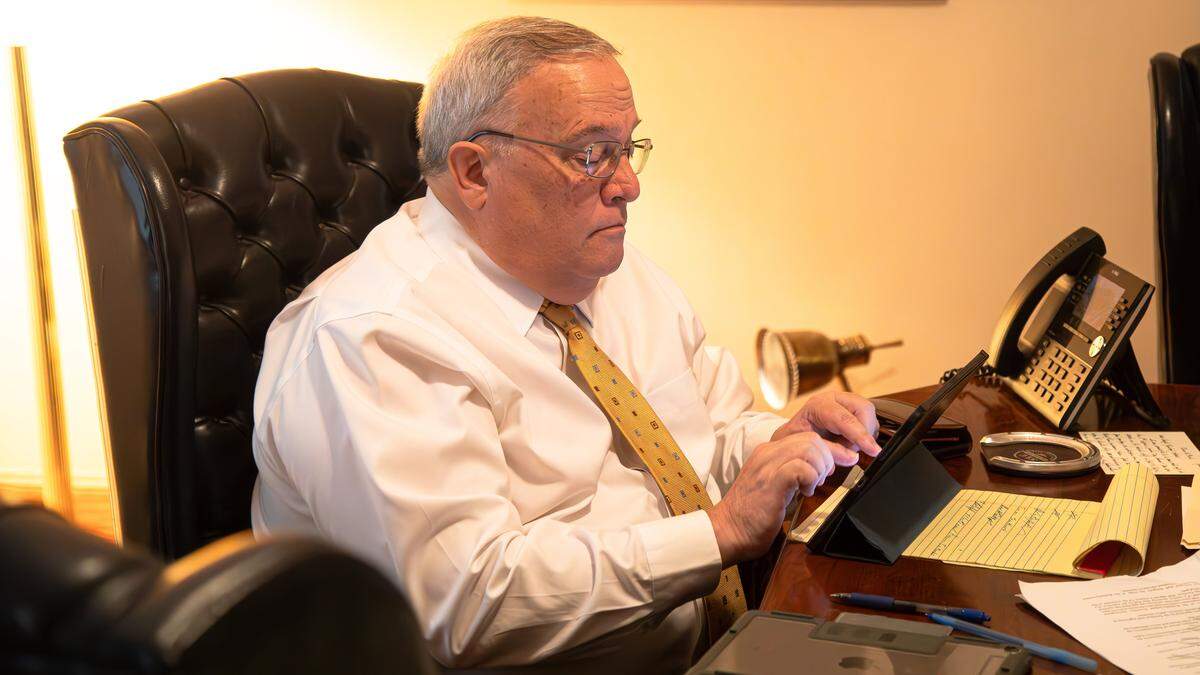
In an April interview, Stivers said he had provided legal services for ARC for five to seven years, which aligns with the period of its most explosive growth. Stivers said he had not been interviewed by the FBI in their investigation in the April interview.
When the Herald-Leader followed up this fall, a spokesperson could not confirm if Stivers still worked for ARC or if the FBI had contacted him since April.
The spokesperson relayed that Stivers said, “I have been an attorney for ARC,” and added that “because he is an attorney, the FBI would not contact him.” The spokesperson did not elaborate on either of those statements.
Stivers said in April he’s had several clients that required his general counsel to go to the state Legislative Ethics Commission for approval. He does not speak to them about pending legislation, he said.
Stivers did not recuse himself from voting on the omnibus Medicaid bill, which among other things increased oversight of Medicaid spending on addiction treatment. It was seen by many as an action that could hurt Addiction Recovery Care and other similar providers’ bottom lines.
‘Greatest weakness’ or biggest strength?
People often compare Stivers to David Williams, who flipped the Senate in 2000 and led the caucus when it was often the only center of power for the GOP in Frankfort. Stivers is not the arm-twister his predecessor was, many said.
In fact, it was Williams’ relational issues with then-Democratic Gov. Steve Beshear that led Stivers to try to “oust” him when Stivers was floor leader under him, per Williams.
Stivers said he never tried to do such a thing. However, he added that he believed Williams “got to a point that he was just really bitter and tired of the place.”
Beshear appointed Williams as a circuit judge before the next legislative session. There was little question in the caucus who would succeed him, and Stivers was widely seen as having a stronger rapport with Beshear.
Williams, who now admires Stivers’ work from afar, said that penchant for good relations can be a double-edged sword.
“His greatest weakness is he wants everybody to like him. It bothers him. He wants to try to please everybody, so I think he’ll be president of the Senate for as long as he pleases,” Williams said.
But most around him think that’s an asset.
Thayer describes it working to great effect in a “good cop, bad cop” routine where Thayer would wear the black hat.
“He has tremendous patience. Way more patience than I have. ‘Let things percolate,’ he’d always tell me. ‘Trust the process,’” Thayer said.
That stands in contrast to the characterization of Stivers held by many a Kentucky liberal. On the Senate floor, Stivers is known for vociferous defenses of conservative policies and takedowns of Democratic arguments or media narratives.
Longtime Kentucky political columnist Al Cross — who described Stivers as “gentle,” intellectual and highly personable — said that’s likely calculated.
“He can get pugnacious from time to time, but it’s a calculated pugnacity. It’s not really his nature,” Cross said. “To ‘own the libs,’ so to speak; it’s become expected of Republican leaders to do that kind of thing.”
Many people interviewed for this story chalked that balance between toughness in front of the cameras and empathy elsewhere up to Stivers’ parents, a rough-and-tumble politician and an altruistic educator.
He called himself what you get “when you cross a Bostonian with a Clay Countian.”
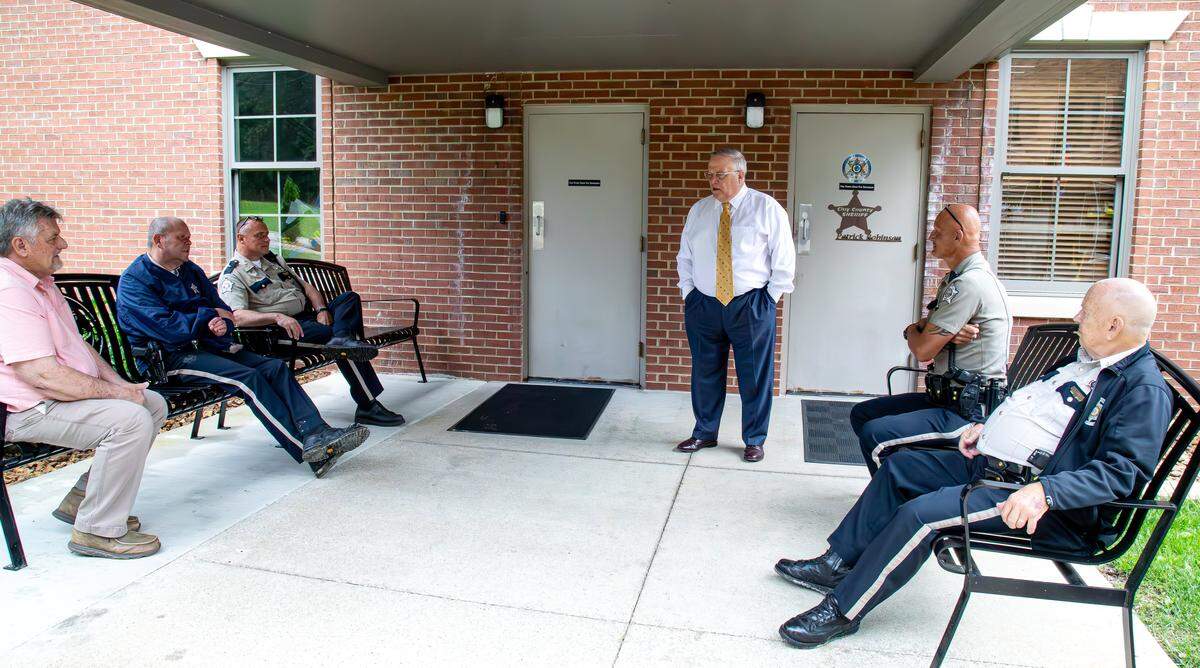
Often in the heat of the legislative session, near the end when tranches of legislation are flying through to passage and all the interest groups and citizens crowd the Capitol Annex to bend the ear of legislators, Stivers holds court. Stories from the old days of politics are a needed respite from the insanity of the session, Piper said, and it’s helped him connect to most of the Frankfort lobbying corps.
“He has as much raised a generation or two of lobbyists as he has a generation or two of legislators. In that sort of quiet way, he teaches all of us how the system works and how to navigate it, and how to help people along the way,” Piper says.
It’s this effort that’s made Stivers such a steady presence in the Kentucky GOP. Without a governor — and even when Matt Bevin was governor from 2015 to 2019, he didn’t unify all corners of the party — most Republican insiders have turned to McConnell for leadership.
With McConnell slated to leave office after the 2026 elections and Beshear in office for another year after that, the role of de facto party leader will be vacant.
“When McConnell leaves, he’s the guy,” Ellen Williams said of Stivers. “The guy.”