
State of the KY Senate race: Barr, Cameron & Morris’ paths to the GOP nomination
This is one of the most consequential election years in recent Kentucky history.
For the first time in 16 years, a seat in the U.S. Senate is opening up. And, it’s not just any seat.
Love him or hate him, Mitch McConnell put his thumb on the scales of political history, arguably as much as any Kentuckian since Abraham Lincoln. He is the longest-serving U.S. Senate party leader ever, and cemented his place in the textbooks when he blocked former President Barack Obama from getting his Supreme Court nominee in 2016, later forming an unlikely alliance with President Donald Trump to reshape the federal judiciary.
It matters who replaces McConnell.
They may not be there for 42 years like him, but with the current average years served at 11.2, they’re likely to make some big decisions, for the state and country.
Though there’s a robust crop of Democratic hopefuls running in their primary, the seat is widely considered safe for Republicans, barring any major shift in national political environment. No Democrat has won a Senate seat in Kentucky since 1992, and no nominee has come close to winning since 2004.
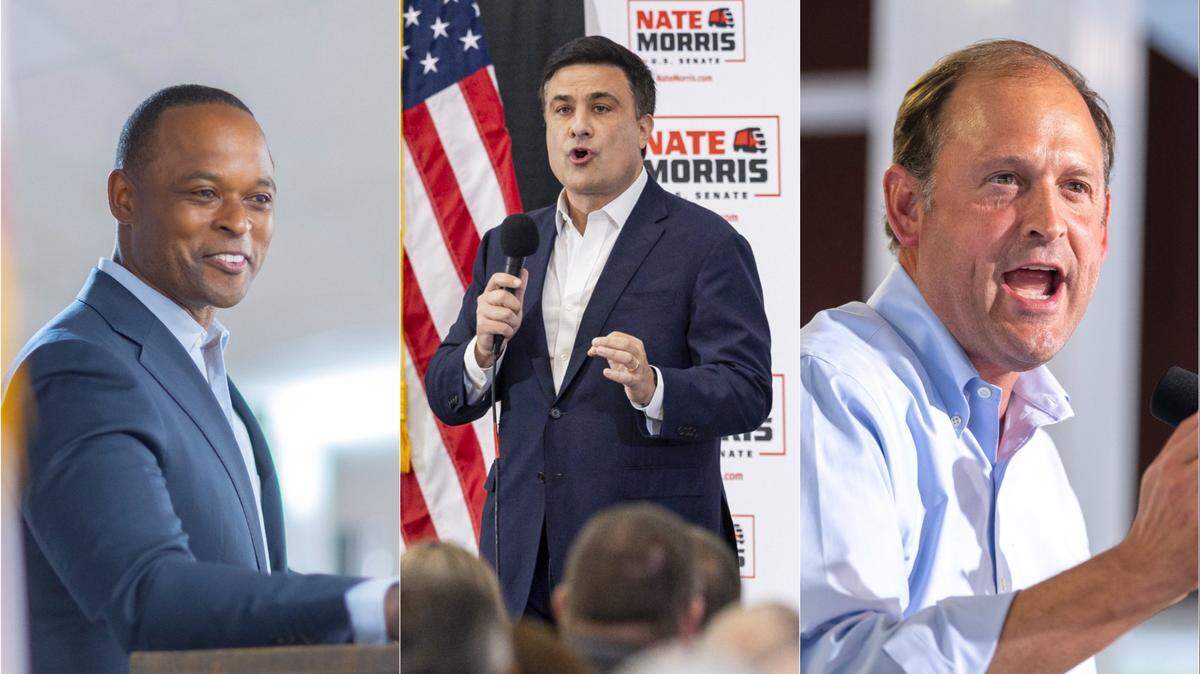
The three leading GOP candidates for the Tuesday, May 19 primary are Lexington tech entrepreneur Nate Morris, former Attorney General Daniel Cameron and 6th Congressional District Rep. Andy Barr.
The race has been ongoing for nearly a year, with Cameron declaring in February 2025 right on the heels of McConnell’s retirement announcement. Cameron has led all publicly available polls, but in the money race he’s lagging well behind Barr ($6.4 million on hand) and Morris ($1.5 million on hand, and personal wealth). Cameron hasn’t reported his number yet, but it’s believed to be well behind the other two.
Morris got a shot in the arm Monday with the news tech billionaire Elon Musk, the world’s richest man, contributed $10 million to a political action committee supporting him.
Michael Faris, a veteran from Elizabethtown who owns a helicopter repair business, is running a vigorous campaign, too. Differentiating himself with a skepticism of America’s relationship Israel and a grassroots group of supporters, it’s believed Faris’ run could affect the final result, even if it lacks the name ID and funding of the other candidates.
Remind yourself of this: Kentucky voters don’t typically tune in until spring, or even until the first Saturday in May, when the Kentucky Derby is held. So what looks one way now — whether polling or fundraising numbers — could completely flip by May 19.
As the senior political reporter at the Herald-Leader, I field a lot of calls from supporters of all three men. Here’s my best distillation of the paths to victory for all three, and the most compelling arguments against each of their candidacies. Please reach out to me via email if you’d like to weigh in at ahorn@herald-leader.com.
The case for Nate Morris
The good news is Nate Morris’ ties to the White House are real.
Some detractors thought in the early goings he exaggerated his friendships with Vice President JD Vance, Donald Trump Jr., Charlie Kirk and other “new right” younger figures in the president’s orbit.
They were wrong.
Morris keeps proving that over and over.
Zack Witkoff, the son of Trump’s special envoy Steve Witkoff, hosted a fundraiser for Morris in the fall. Trump-endorsed Ohio governor candidate Vivek Ramaswamy headlined.
Morris finagled the Kirk endorsement for his campaign launch. Months later, he spoke at the top event for Kirk’s organization, Turning Point USA, and honored his late friend. Trump Jr. and Vance haven’t endorsed, but keep posting to X almost as if they have.
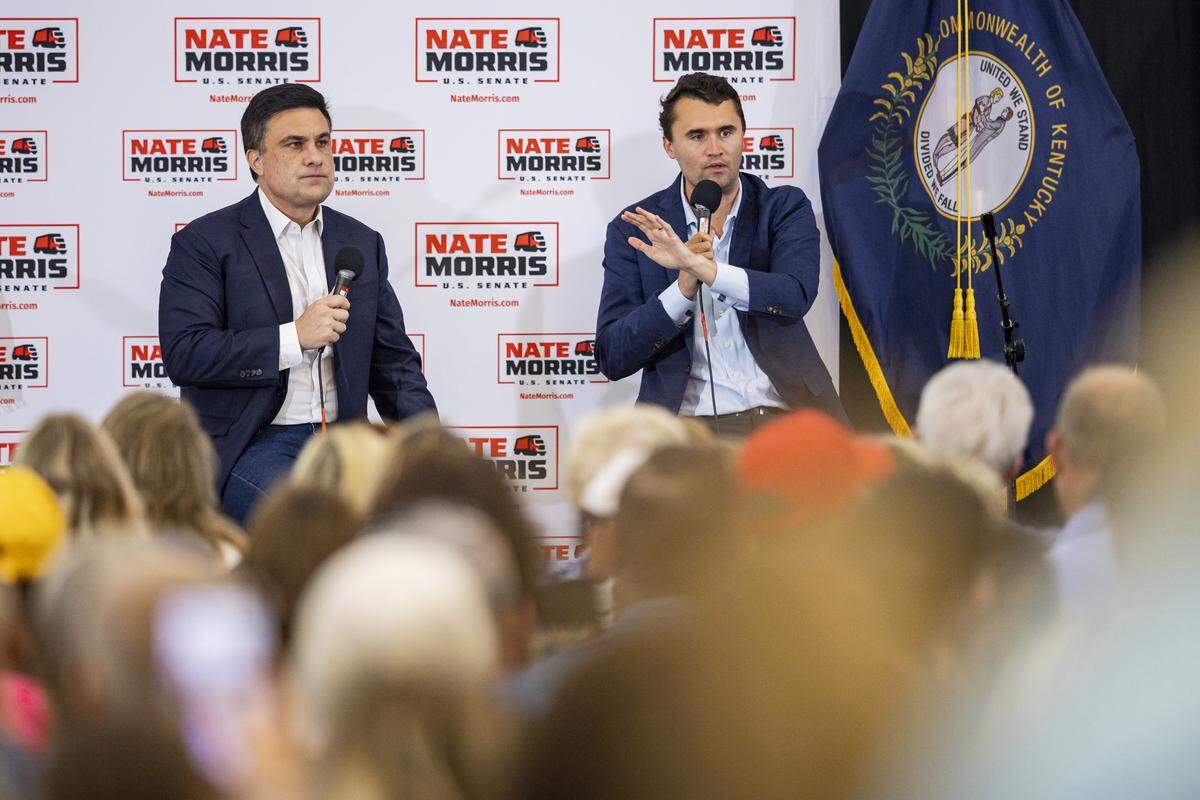
These are the kind of connections that lead some to believe Morris is best positioned to get an endorsement from Trump. Morris also has an anti-McConnell message tailor-made for Trump, who is clearly no fan.
Kentucky Republicans may not care all that much about how pro- or anti-McConnell the next senator is; Trump probably does, though.
Most agree, if it’s granted with enough time to run ads and get the message out, Trump could decide the fate of the primary if he endorses a candidate.
Even Morris supporters would grant he’s in the worst place of the top three candidates in the polling right now. But this isn’t so relevant in the bull case for Morris.
Take a note from Vance. In a late February 2022 Emerson poll of the Ohio Senate race, Vance only had 8% support — a newcomer trailing two Ohio political stalwarts by big margins. By March, Vance pulled closer, but never led the pack before getting Trump’s endorsement in April.
In some supporters’ telling, Morris’ connections imply his polling numbers won’t have to be all that impressive to get the nod from the president; they just have to be good enough to ensure a Trump endorsement would seal the deal. Is the magic number 24%? Maybe even 18%?
Whatever it is, those supporters are confident in the amount of money Morris and allies have to get there.
In just one year – 2022, when his company went public – Morris made $41 million. That’s a lot of scratch.
Musk’s $10 million to the Morris-supporting PAC, Fight for Kentucky, is possibly the biggest single political donation in Kentucky history. Despite the bluster of other campaigns calling it a waste of money, don’t be fooled: that number scares them.
The case for Cameron
The good news for Cameron is his lead in the polls is real.
In the months of polling done on this race since Cameron jumped in, a small amount of undecideds have moved to Morris and shifted to Barr. But Cameron’s numbers haven’t gone down. A recent poll from a PAC supporting him showed him at 40% compared to Barr at 25% and Morris at 13%.
Morris and Barr are newcomers to statewide elections. Cameron won a contested primary for AG in 2019, then he beat well-known Democrat Greg Stumbo in the general. Four years later, with the early backing of Trump, he cruised to a primary victory over well-funded and well-connected competition in the gubernatorial primary.
Add that to the fact Cameron was a newsy AG — he was the first Black attorney general in state history, he became a national figure when he led the investigation into the police killing of Breonna Taylor and spoke at the Republican National Convention in 2020 — and you may find Cameron support is a mile wide, but much more than an inch deep.
It’s not just name ID, the Cameron camp would argue. It’s organic name ID. Kentuckians know him because of the things he’s done, not the ads he’s run.
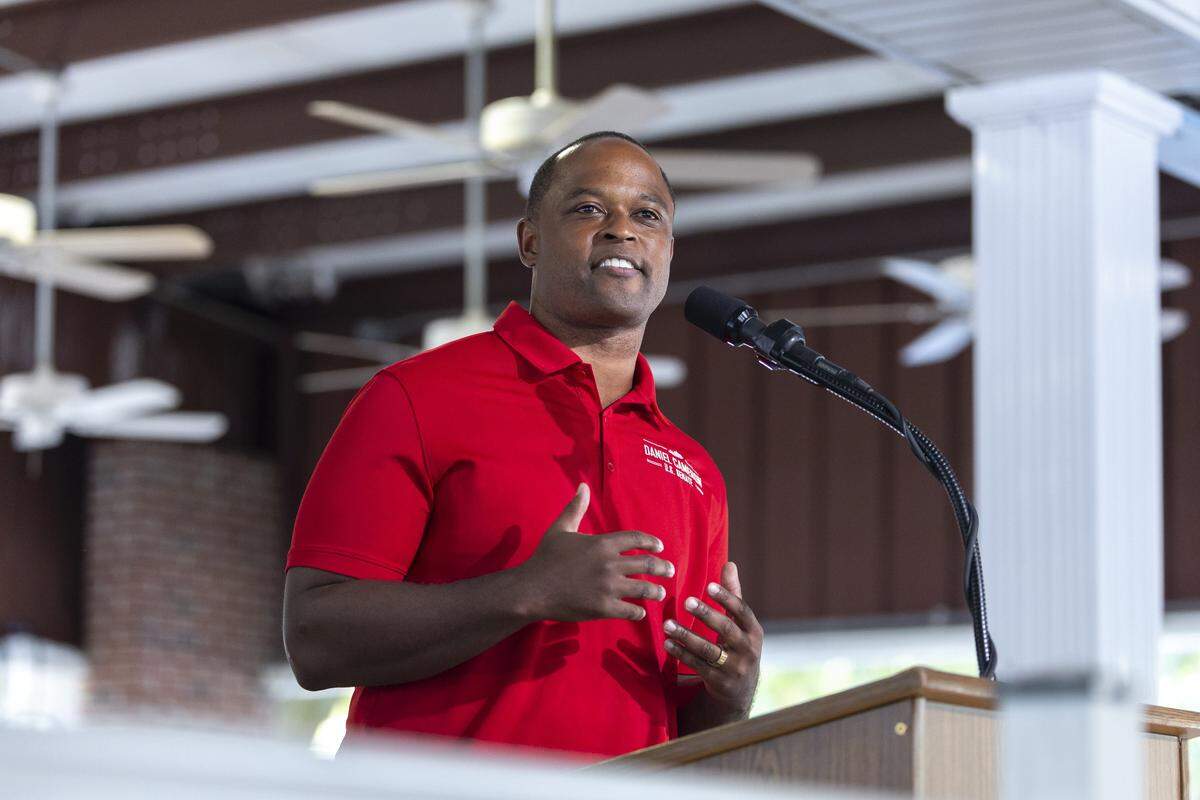
Even the rosiest Cameron defender would not deny his campaign is far behind in the money race and not on track to catch Barr or Morris. But, they argue the name ID, social media following and impression Cameron has left on voters as a solid conservative and family man will win the day.
As insurance, people in Cameron’s orbit would certainly like some outside spending on their behalf. Might a billionaire like Jeff Yass, who is closely tied to Sen. Rand Paul and supported Cameron in 2023, swoop in with $2 million? Would Club For Growth, a prominent political organization that’s started spending against Barr, go in for Cameron? The answers to these questions could tip the race.
Counterintuitively, some Cameron supporters argue their biggest donor this year is Andy Beshear in 2023.
Beshear’s political team won plaudits for its savvy takedown of Cameron’s support of the state’s abortion ban, which doesn’t have exceptions for rape or incest. That campaign hurt Cameron with the general electorate, but for diehard anti-abortion voters — many of whom are committed to showing up in May — it solidified his conservative bona fides.
The work to dissuade moderates from voting for Cameron was real and effective; but those people just aren’t voting in the 2026 Republican primary.
The bull case for Barr
The good news for Barr is he has what Cameron and Morris have: a base and money.
Having raised chunks of cash into his Congressional account — plenty from Kentucky, as well as the financial industry given his perch on the House Financial Services Committee — Barr started the race with a whopping $3.7 million. He’s only gained from there.
Unlike Cameron, he has plenty of resources to pay for television ads, consultants to fashion them and a team of organizers to crisscross the state. And unlike Morris, he started with some amount of name ID and support.
Outside support for Barr has already revved up and may continue. It comes as no surprise companies in the financial sector make a lot of money, and they’ll probably want to spend more than the $3,500 individual contribution limit.
Barr’s 13-plus years in Congress haven’t been loud. Aside from a 2018 close call to now-Democratic U.S. Senate candidate Amy McGrath, he hasn’t done much to get his name out on television air waves or in the middle of social media scuffles.
Barr has, however, built a base of support in Lexington as an agreeable conservative politician and a congressman with high marks for customer service. Thanks in no small part to late longtime staffer Tatum Dale, Barr is known in Kentucky and Washington, among Republicans and Democrats, for top-notch constituent services.
Morris may have pulled himself into the money race with a $3 million loan to his campaign, but unlike Morris, Barr grew into a well-known entity in Central Kentucky before this race.
To the extent politics is still regional, Barr also got a big boost in Eastern Kentucky from the only Kentucky GOP congressman that appears to be endorsing in the race: Hal Rogers.
The longest continuously-serving member of the U.S. House, who himself is seeking a 24th term this year, Rogers backed Barr early and appears to be pulling some strings in the region for him. Endorsements in and of themselves aren’t what they used to be in politics, but the GOP regional apparatus is loyal to Rogers and is a big positive for Barr as he looks to become a household name beyond the greater Lexington area.
Barr is also known as one of the hardest workers in Kentucky politics. It doesn’t take more than a cursory glance through his social media to recognize there’s some truth to the narrative. Barr really is all over the place when he’s home from Washington.
You can bet he and his team are working hard on the Trump camp, too. Even if Barr and Trump aren’t the most natural fit based on temperament, Barr’s got one key factor working in his favor: math.
With the recent death of a GOP House member and the resignation of another, the Republican majority is a razor-thin five votes, and with Kentucky Rep. Thomas Massie routinely bucking leadership, it’s a paltry three. It’s hard to see how Trump could afford spurning Barr in an endorsement of, say, Morris, if he wants to pass anything meaningful through Congress.
Speaking of math, the Barr team is also keen on the argument Barr leading the Republican ticket would be the best thing for whichever Republican gets the nomination to replace him. Barr has won big in the last three election cycles, and some believe that would transfer down to enthusiasm in the Central Kentucky-based district.
Why Nate Morris could lose
Morris has a favorability problem, a problem he can’t afford running against two well-liked Kentucky Republicans.
In a recent poll from a pro-Cameron PAC, Morris had the worst favorability among Republicans by a healthy margin at just +9. It was worse (zero) in a poll released by the Barr campaign in the fall.
Morris burst onto the Kentucky political scene making crass remarks about McConnell, calling him “scum” and complaining how he “pulled his pants down” for former President Joe Biden, before he even announced.
Those words may have gotten eyeballs on the internet — as a first-time candidate, he needed them — but they may backfire at the ballot box, especially given older voters typically play a decisive role in primary elections.
Polling also shows us a majority of Kentucky Republicans aren’t in love with McConnell; however, they’ve respected him enough to keep sending him to Washington by huge margins. Morris’ opponents argue the anti-McConnell focus is a shtick that will wear thin on Kentucky voters more eager to learn about their candidates’ visions for the future.
The existence of another loudly anti-establishment candidate, Faris, could also crowd Morris out from converting voters to with that message, opponents say.
No one would deny Musk’s $10 million to a PAC supporting Morris helps him, but Musk’s 2025 political track record isn’t exactly sterling. Musk pumped many millions into a Wisconsin Supreme Court race last April — even handing out $1 million checks to individual voters in a contest— only for his chosen candidate to lose by 10 points. Musk’s popularity among the American public has also taken a dip since his high-profile entry into politics.
Another knock on Morris’ odds: Trump doesn’t seem giddy to give out U.S. Senate endorsements just yet.
The president has only endorsed in three open seat races so far, and all of those endorsements were given within a few days of the candidate announcing. What makes this race any different?
Case against Cameron
Simply put, Cameron does not have money.
Barr started this year with more than $6.4 million on hand. Though his numbers have yet to come out, Cameron is on track to have a small fraction of that total. Morris seems able to reload at will.
It’s unclear how Cameron’s campaign could dig itself out of its financial position, especially if outside groups don’t beef up their operations.
Television ads, though waning somewhat in relevance, still matter. If Barr and Morris keep going after each other on the air waves, primary voters could be forgiven for thinking it’s a two-man race, forgetting about Cameron entirely.
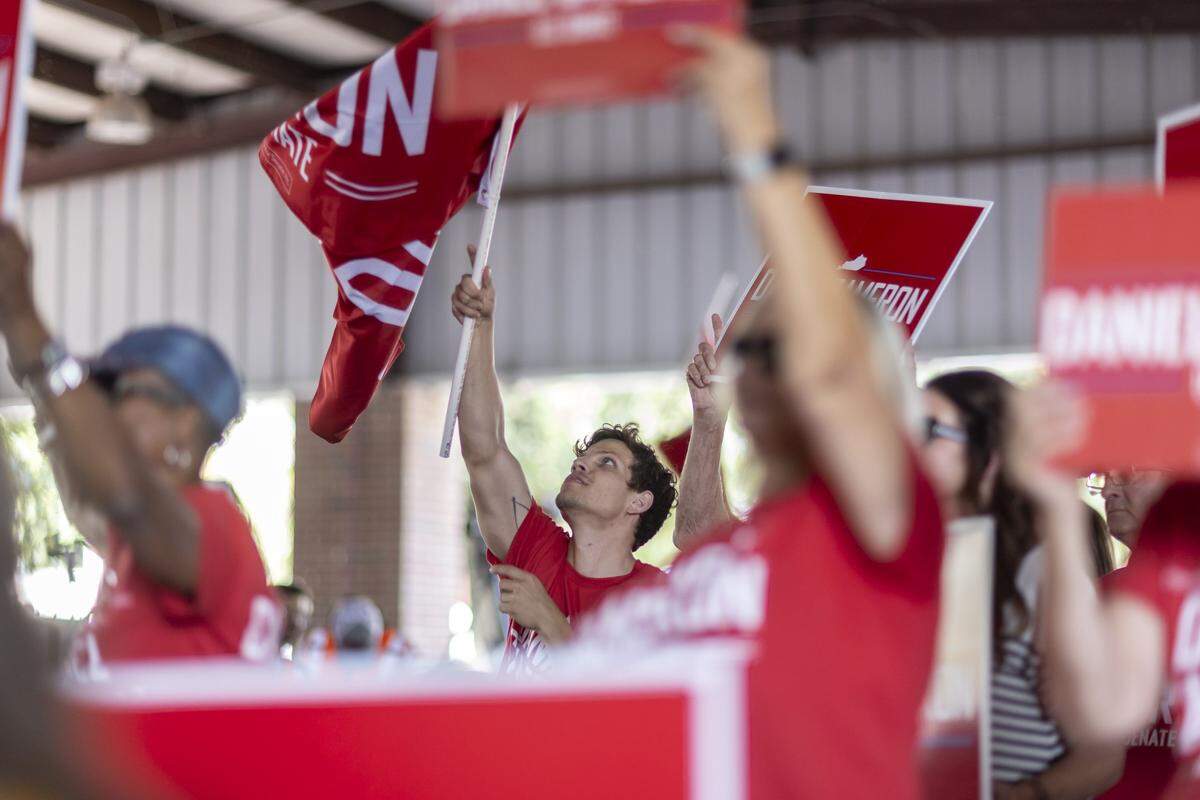
And if you’re willing to accept the Morris campaign’s narrative that McConnell will loom large in the results, Cameron is in an awkward “both and neither” position. He has the closest professional ties to McConnell, but hasn’t been embraced by the same McConnell-linked money networks that buoyed him in previous campaigns. He’s also got some backing from anti-McConnell figures, but Morris has largely cornered the market on that message.
There is also the matter of something that hasn’t yet worked: a negative GOP ad campaign against Cameron. It’s not clear branding him a “loser” will work in and of itself, but Trump gave the other campaigns a favor when he dropped an evocative post-2023 loss analysis.
“Daniel Cameron lost because he couldn’t alleviate the stench of Mitch McConnell,” Trump wrote at the time.
The attack ad writes itself.
Against Andy Barr
Frankfort and Washington may love Andy Barr, but does the rest of Kentucky?
Barr has more than half of the GOP House conference in Washington on his side, and make no mistake: he is the candidate of choice for at least a plurality of connected Republicans in Frankfort.
But polls of regular GOP voters have shown just some, but not a tremendous amount of, movement for Barr just yet. It’s unclear how many Kentucky Republicans will start paying attention in time for Barr’s well-funded messaging operation to persuade them.
As of now, Barr’s team is running a by-the-book campaign — making inroads with local officials, big platform announcements like his pro-coal agenda launch at an Eastern Kentucky mine, no gaffes.
There’s a reason the “book” exists: It usually works. But maybe that’s not what voters, particularly Republicans, want at this time. Trump is a politician who shoots from the hip; Barr, generally speaking, does not.
He doesn’t quite have the freewheeling, unpredictable energy we’ve seen from the White House one year into the Trump administration.
From the standpoint of the Trump endorsement, Barr supporters like to think the congressman’s vote in a tight-margin Congress matters a lot. Trump may not care very much. He already passed his marquee budget bill, the “One Big Beautiful Bill Act,” and if Barr wants a future in GOP politics, would he really buck the president?