
Why did the KY Supreme Court terminate judge’s impeachment? Here are 4 key points

READ MORE
Judge Julie Goodman impeachment
Former Kentucky state Rep. Killian Timoney filed a petition in January to impeach Fayette Circuit Judge Julie Goodman over her handling of six different cases in Lexington. Goodman and her legal team deny any misconduct, and other legal professionals have raised concerns about the possible precedent an impeachment could set.
Expand All
The Kentucky Supreme Court on Monday ordered the General Assembly to stop impeachment proceedings against Fayette Circuit Court Julie Muth Goodman.
The opinion and order, written by Chief Justice Debra Hembree Lambert, voided Goodman’s articles of impeachment, ruling that, among other things, Goodman’s due process rights were being violated, her offenses were not impeachable, and the legislature was not the proper venue for judicial reprimand.
The court also ruled that the impeachment effort violated the separation of powers doctrine in the Kentucky Constitution.
Here are four key points from the Supreme Court’s order and 5-1 decision.
Supreme Court says original petition was invalid
Chief Justice Lambert wrote that the petition should never have been considered by the legislature, because it lacked a key procedural component.
Killian Timoney, a former Republican lawmaker seeking to win back his Lexington-area House seat this year, filed the petition in January, arguing Goodman had abused her office. However, under Kentucky law, a notary was required to sign the petition.
In her original response to Timoney’s petition, Goodman noted the petition was invalid because it lacked authorization from a notary. The House impeachment committee accepted it anyway.
As a result, Lambert wrote, the legislature violated its own rules.
“The Legislature decided as a matter of public policy that a petition for impeachment must be verified by an affidavit,” Lambert wrote. “The Legislature violated its own rule in entertaining a petition for impeachment that did not follow this statutory mandate. This in and of itself is a fundamental, fatal flaw in the impeachment proceedings against Judge Goodman, and the Legislature itself has previously acknowledged this.”
Conduct should have been considered by Judicial Conduct Commission
One of the key points of contention for Goodman’s lawyers was whether the General Assembly is the proper avenue to consider claims of judicial misconduct, or whether that power should rest solely with the Kentucky Judicial Conduct Commission.
Lambert and a majority of the state Supreme Court ruled Monday that power should lie with the commission.
The state’s highest court wrote that the legislature’s impeachment effort ran counter to the Kentucky Constitution’s 1976 Judicial Article, which created the commission to address potential conduct.
“A review of the unsworn allegations contained in the facially invalid impeachment petition against Judge Goodman demonstrates that no allegation of misconduct rose to this extreme level of misconduct,” Lambert wrote.
Other avenues already exist for claims of judicial misconduct or unreasonable rulings, Lambert wrote. The Judicial Conduct Commission can investigate the former, and appellate courts can overturn Goodman’s rulings in the latter.
Because of this, Lambert wrote, the allegations were inappropriate for impeachment.
Lambert’s order noted that the commission is currently considering whether to review Goodman’s conduct.
Legislature violated Goodman’s due process rights
Goodman had asked all levels of Kentucky’s judiciary to stop the impeachment proceedings because her due process rights were being violated.
Her initial lawsuit was filed in Franklin Circuit Court. The lower court judge declined to intervene, as did the court of appeals, which said the Supreme Court would be the ultimate decision maker.
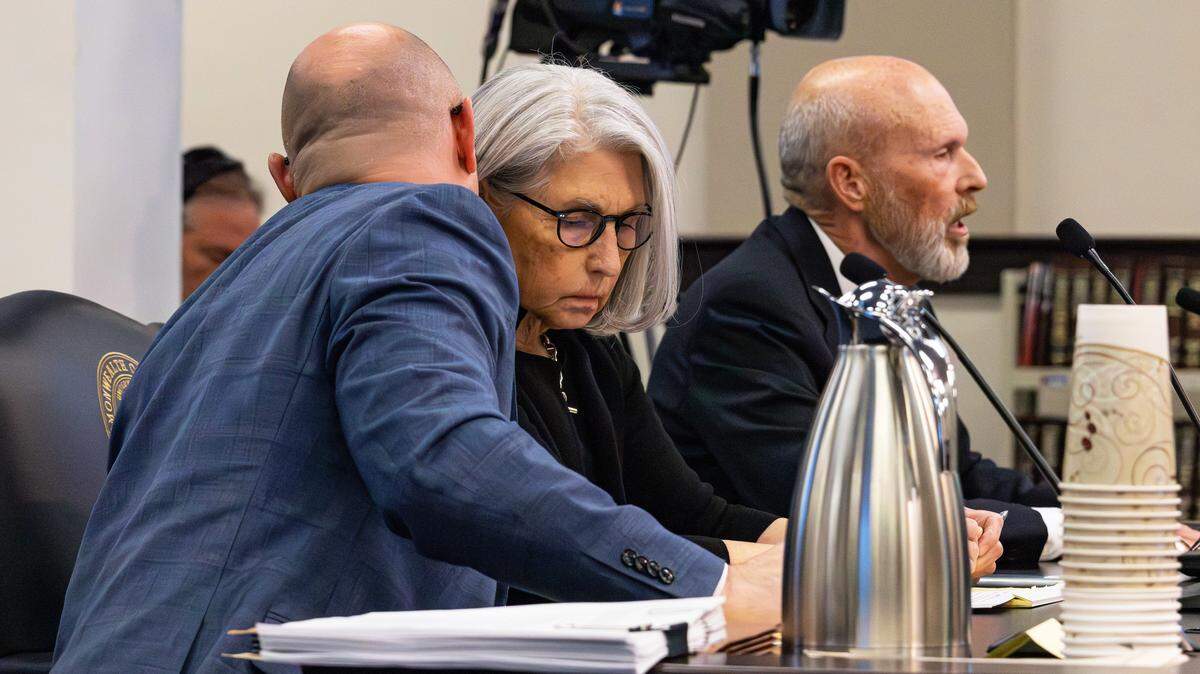
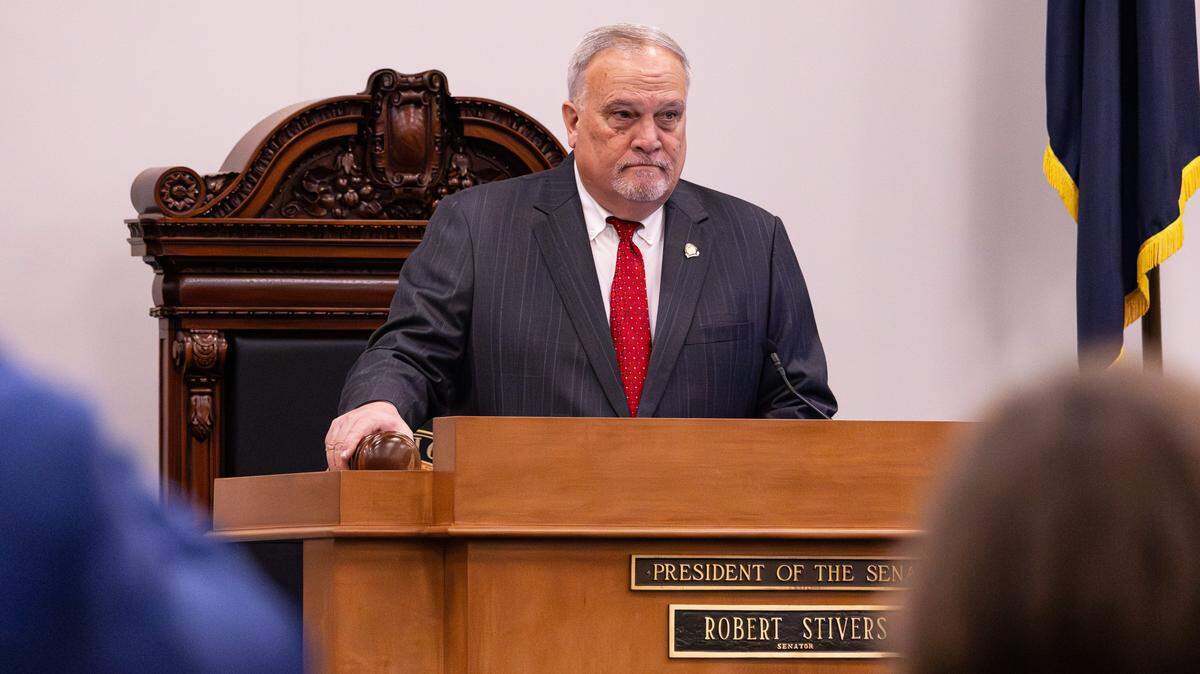
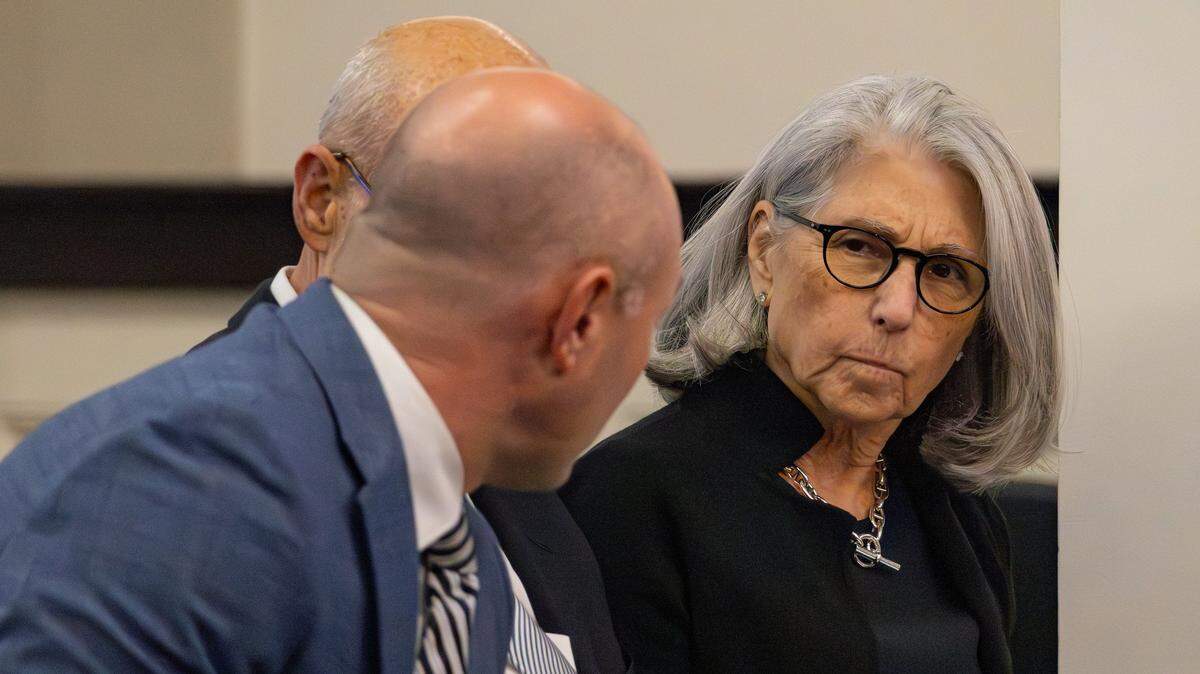
The lower court eventually ruled last week — after the House had impeached Goodman on March 20 by a 73-14 vote, largely along party lines, with Republicans voting favor — that the petition should be voided, but noted that the final decision would rest with the Supreme Court.
Goodman argued in her suit that because five of the six cases in the impeachment petition were still open, she was prohibited from discussing them by the Kentucky Judicial Code of Conduct.
The Supreme Court concurred, noting that because impeachment hearings are public, Goodman could not explain or defend any of her actions without committing judicial misconduct.
“While she received notice, a hearing, and what we must presume were neutral adjudicators, she was forced by her obligations under the Judicial Code of Conduct to stand silent rather than attempt to defend her actions or thought processes in taking those actions,” Lambert wrote.
Legislature violated separation of powers
Opponents of Goodman’s impeachment often sounded the alarm that using the state legislature to remove a sitting judge could violate the state’s separation of powers laws.
Lower court judges didn’t attempt to intervene to stop legislative proceedings, fearing that it would overstep their authority.
And on Monday, the Supreme Court ruled the legislature had overstepped its authority by impeaching Goodman.
“Kentucky’s Constitution contemplates co-equal branches of government,” Lambert wrote. “Yet the Respondents would have us interpret it (or more to the point, not interpret it) such that the Legislature may have the complete, unchecked power to impeach judicial branch officials for matters which our Constitution gives this branch the authority to address.” “This would not be co-equal. It would not be constitutional. It would be tyrannical,” she wrote.
In a supporting opinion, Justice Kelly Thompson wrote that allowing the legislature to impeach Goodman would allow them to control the judiciary.
“The legislature’s aggressive actions toward the judiciary appear to be an organized assault on the independence of the judiciary utilizing the legislature as the weapon,” Thompson wrote. “We cannot allow the legislature to arbitrarily threaten impeachment based on its dislike any of our rulings.”












.jpg)