Officials urge drivers to stay off icy roads. If that’s impossible, here are some tips
READ MORE
Ice storm aftermath: Damage and hazards
Click below for complete coverage of the winter storm.
Expand All
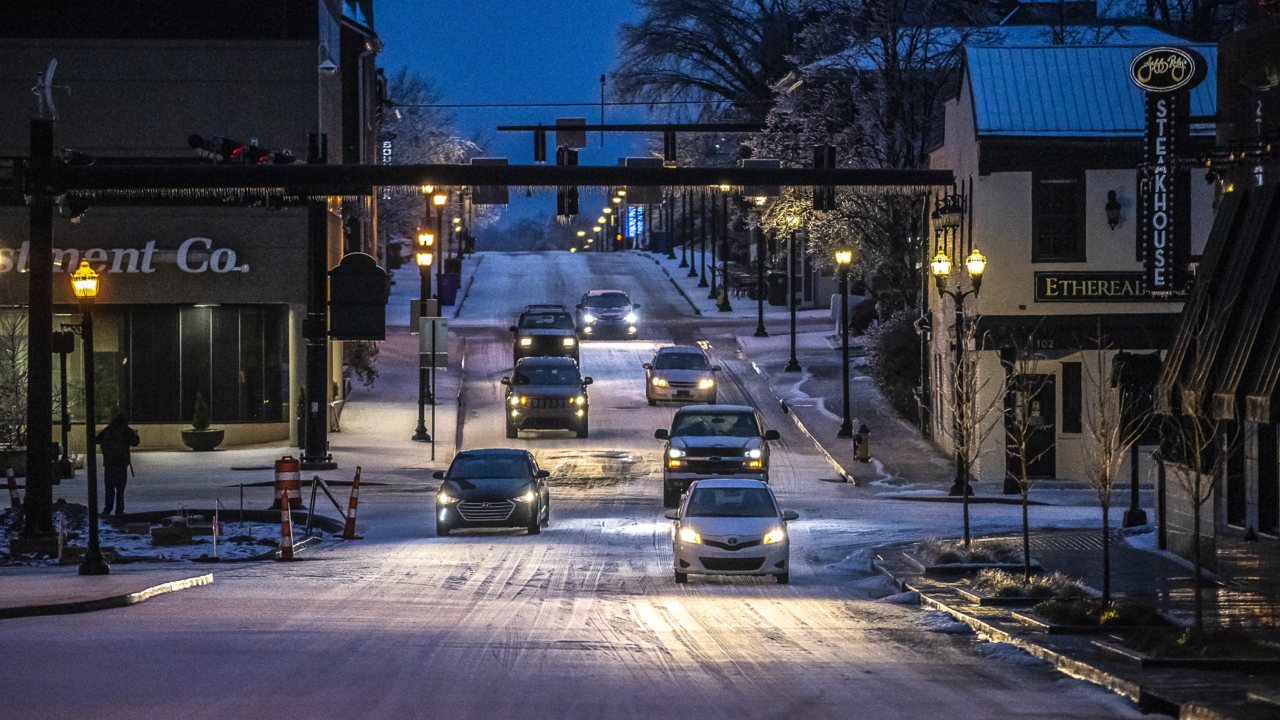
Most government and police officials have asked drivers to avoid icy roads if it all possible, but if someone finds themselves on slick roads state police and others have offered some tips to stay as safe as possible.
Before ever getting out on the road, it’s important to thoroughly clear windows and vehicle lights of all ice or snow. If it’s not possible to park vehicles in garages or under carports before freezing rain or snow starts, tarps or other coverings can be used to help prevent windshields from getting coated in ice, according to AAA.
If ice is already on the windshield, start the vehicle’s defrost at full heat and set the airflow to “recirculate,” AAA recommends. Homemade deicing solutions can also be made using one part rubbing alcohol and two parts water, according to AAA. Adding a few drops of dish soap to the mixture can help the solution coat the ice more evenly. Once ice on the vehicle begins to melt, a scraper, squeegee or soft bristle brush can be used to remove it.
Once a vehicle is cleared of snow and ice and a driver is on the road, it’s important to wear a seat belt, drive slowly and increase stopping distance.
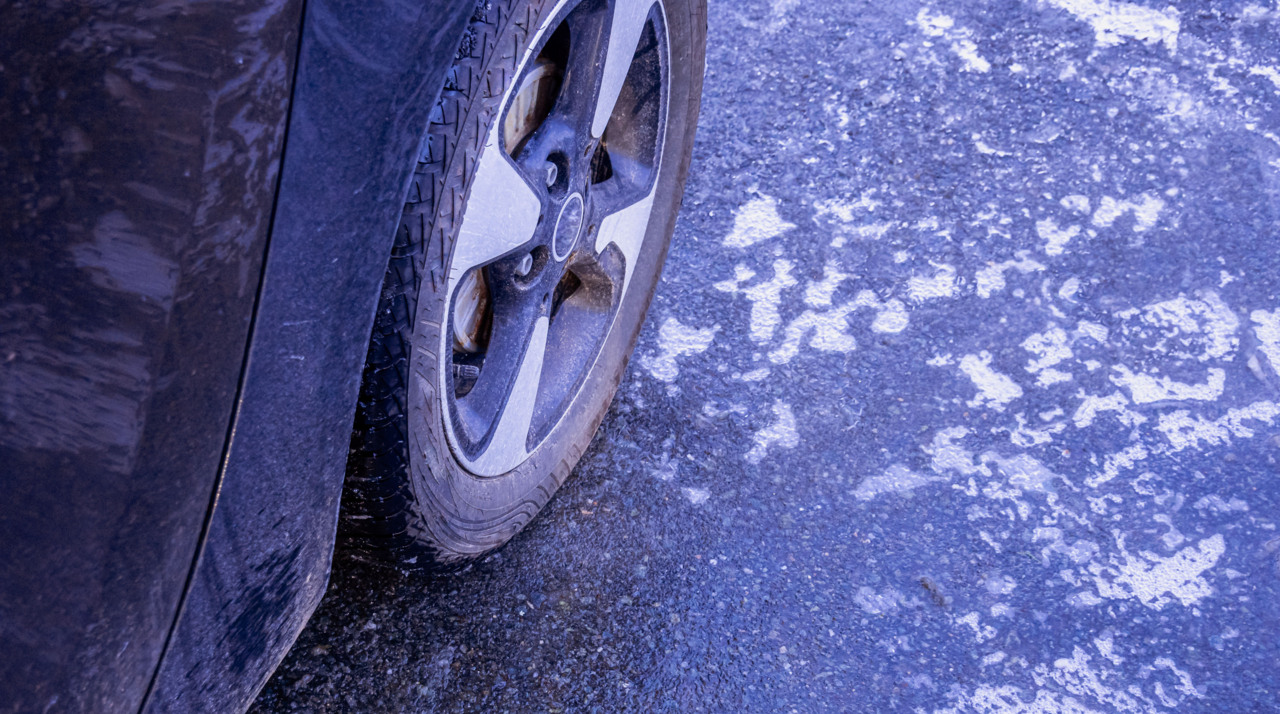
In a video announcement this week, Kentucky State Police spokesman Sgt. Billy Gregory discussed how driving on ice is different than driving on snow. With black ice, which can look like a wet road, the tires lose all traction, Gregory said.
“When (you) reach a piece of black ice, take your foot off the accelerator immediately,” Gregory said. “Make sure you’re keeping a straight wheel, it’s advisable since you should be able to coast safely over the ice. If you turn the wheel you may wind up in a skid and lose control of the vehicle.”
If a driver ends up in a skid, Gregory said it’s best to turn into the skid and avoid using the brakes. If brakes are necessary, don’t slam the brakes, pump the brakes, he said.
“Once your tires get traction on the road again, you should find it easy to correct from there,” Gregory said.
If it’s absolutely necessary to be on the road, Gregory also recommends keeping a “winter survival kit” in the vehicle that includes blankets, jumper cables, cat litter, flares or reflectors, and food and water.
This story was originally published February 10, 2021 at 5:01 PM.