As KY General Assembly winds down, where do key crime, abortion & gun bills stand?

READ MORE
2024 General Assembly
Keep up with the latest out of Kentucky’s 2024 legislative session.
Expand All
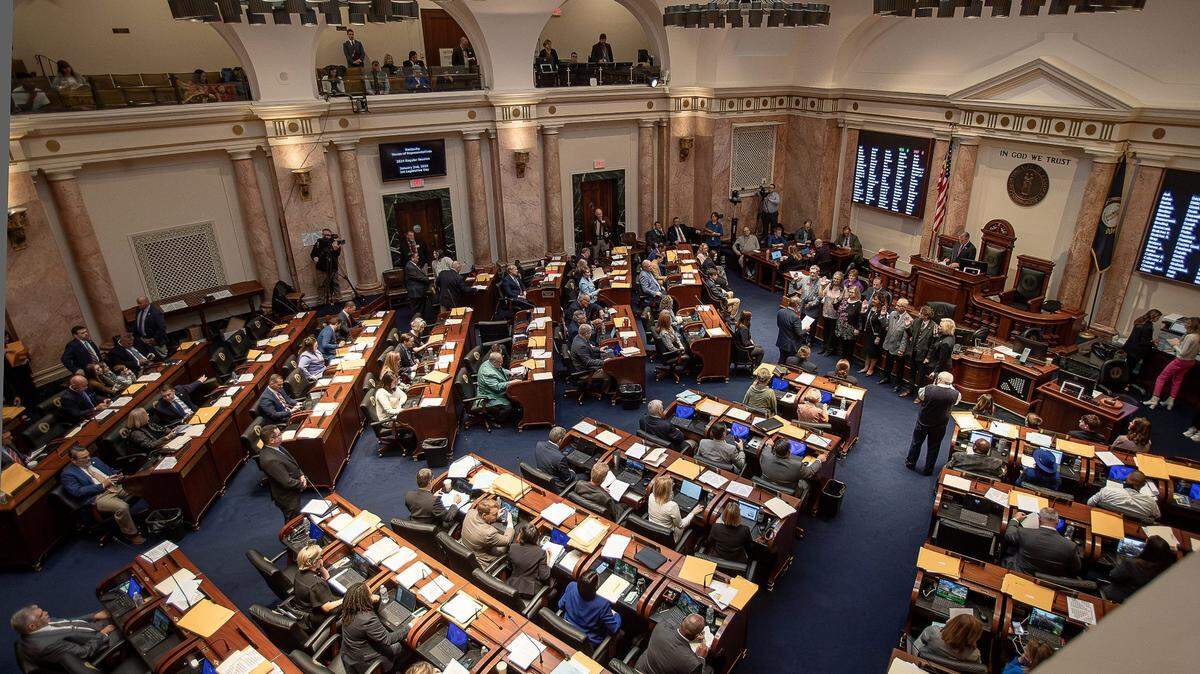
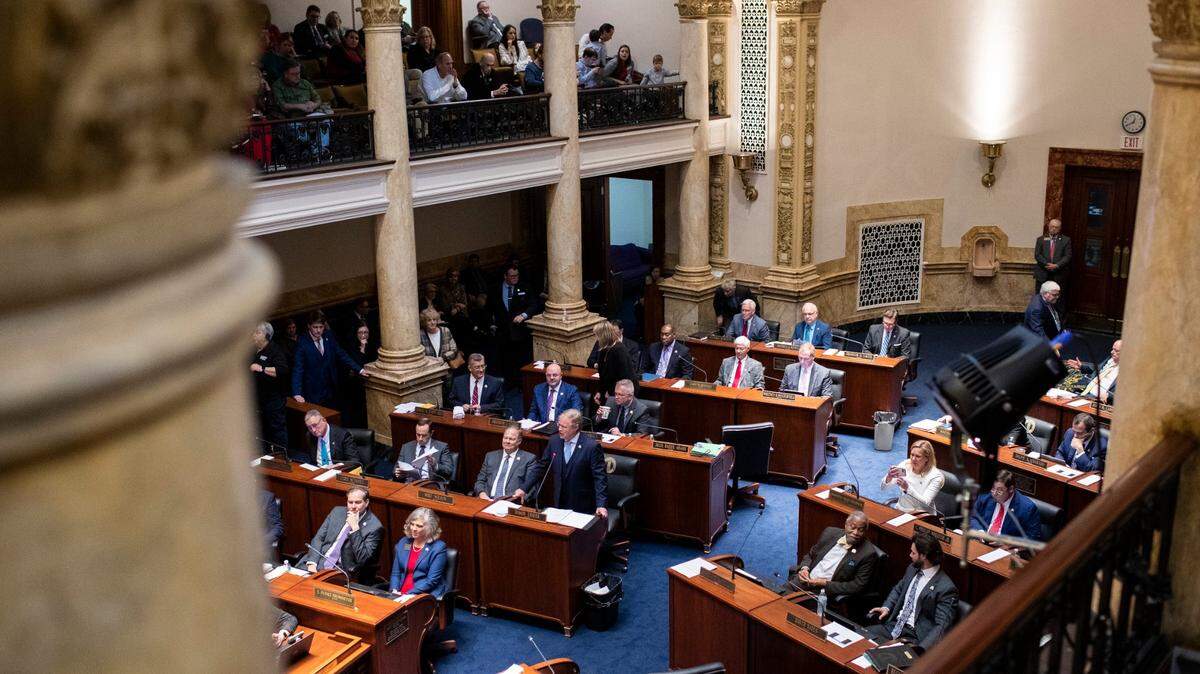
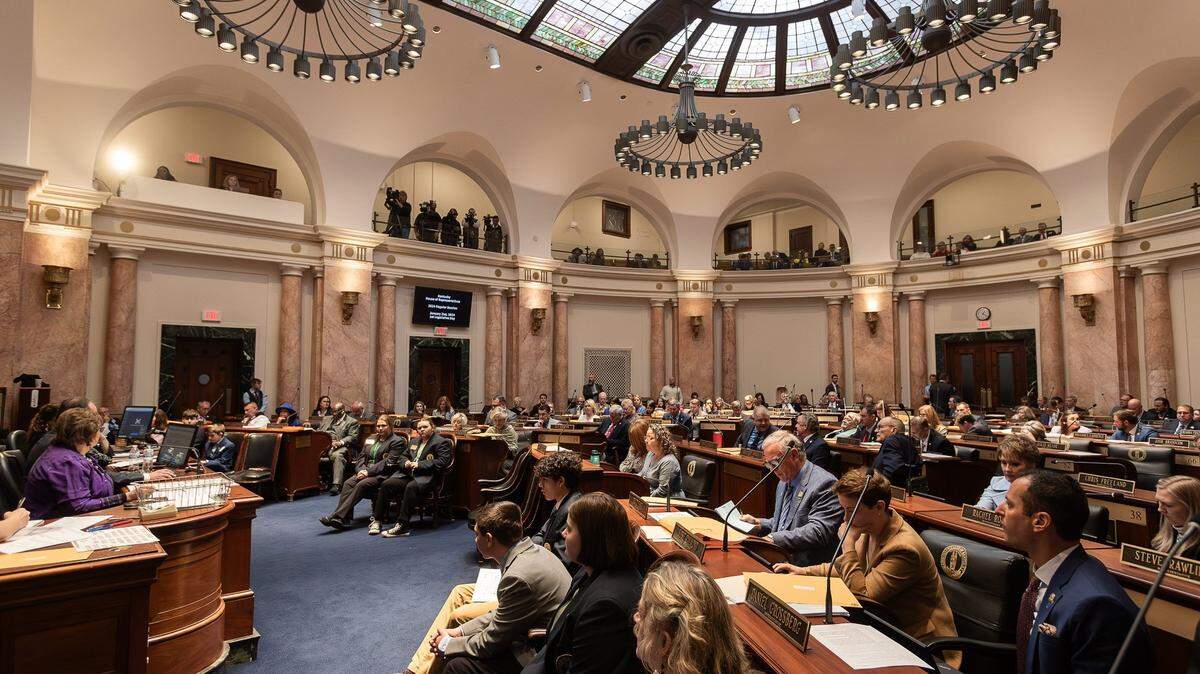
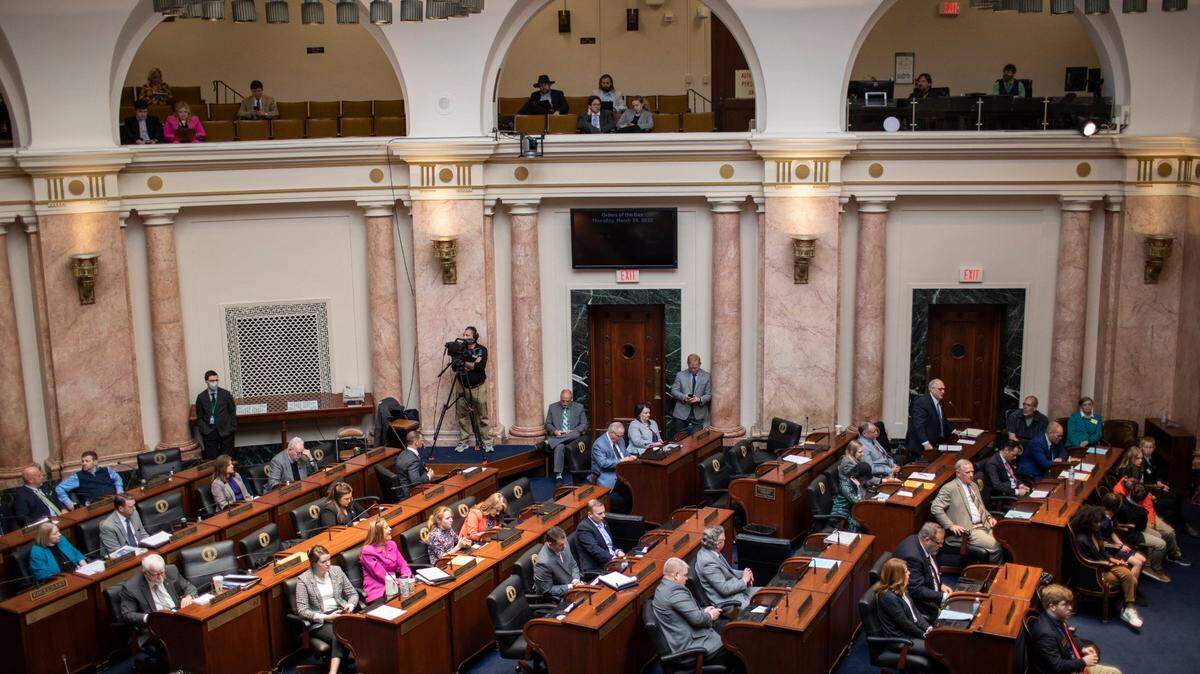
The 2024 General Assembly is drawing to a close.
With just four legislative days left — and only two days before the veto recess — a number of high-profile and priority pieces of legislation are still awaiting final passage.
The legislature meets for 60 days in even-numbered years, and its main task is passing a state two-year budget.
Lawmakers will gather for the 57th and 58th days of session on Wednesday and Thursday, and the 10-day veto period begins Friday. Legislators return to override any vetoes from Democratic Gov. Andy Beshear and pass their final bills on April 12 and April 15, at which point they adjourn sine die.
Republicans hold a veto-proof supermajority in both chambers.
As of Wednesday morning, here’s a look at where key bills stand.
The state budget
In every even-numbered year, the bill that receives the most scrutiny, lobbying attention and debate is generally the state’s biennial budget.
This year is no different, as legislators have worked feverishly to decide how the more than $15 billion annual pie of General Fund appropriations is sliced up.
The GOP-led legislature is expected to get the final version of all five major budget bills – the executive branch budget, the one-time appropriations bill, the two other branch bills and the transportation cabinet budget bill – passed this week to withstand Beshear’s veto pen.
Top of mind for Republicans when it comes to crafting the budget is doing so in a way that ensures a further cut to the personal income tax from 4% to 3.5%. They need to meet certain spending, savings and revenue “triggers” to do so that would permanently exempt one-time appropriations from the state reserves from being considered under that trigger – the move would make future tax cuts more likely.
No version of the budget has included universal pre-K or direct K-12 teacher pay raises, two of Beshear’s top spending priorities. However, the Senate’s latest version of the budget included funding for various infrastructure and economic development projects across the commonwealth.
Leadership from both chambers presented what they’ve said is likely to be a final Executive Branch budget in a Free Conference Committee, but that document was not made available as of Tuesday afternoon.
Crime bill
House Bill 5, called the Safer Kentucky Act by its sponsors, is a sweeping bill that would toughen much of the state’s criminal code. If passed, it would add new penalties for the homeless, shoplifters and vandals, as well as carjackers, fentanyl dealers and violent offenders, the last of whom would go to prison for the rest of their lives after “three strikes.”
One estimate puts the crime bill’s price tag at more than $1 billion over the next 10 years, given the projected need for thousands of additional prison and jail beds.
The Senate passed the crime bill with some changes on March 15.
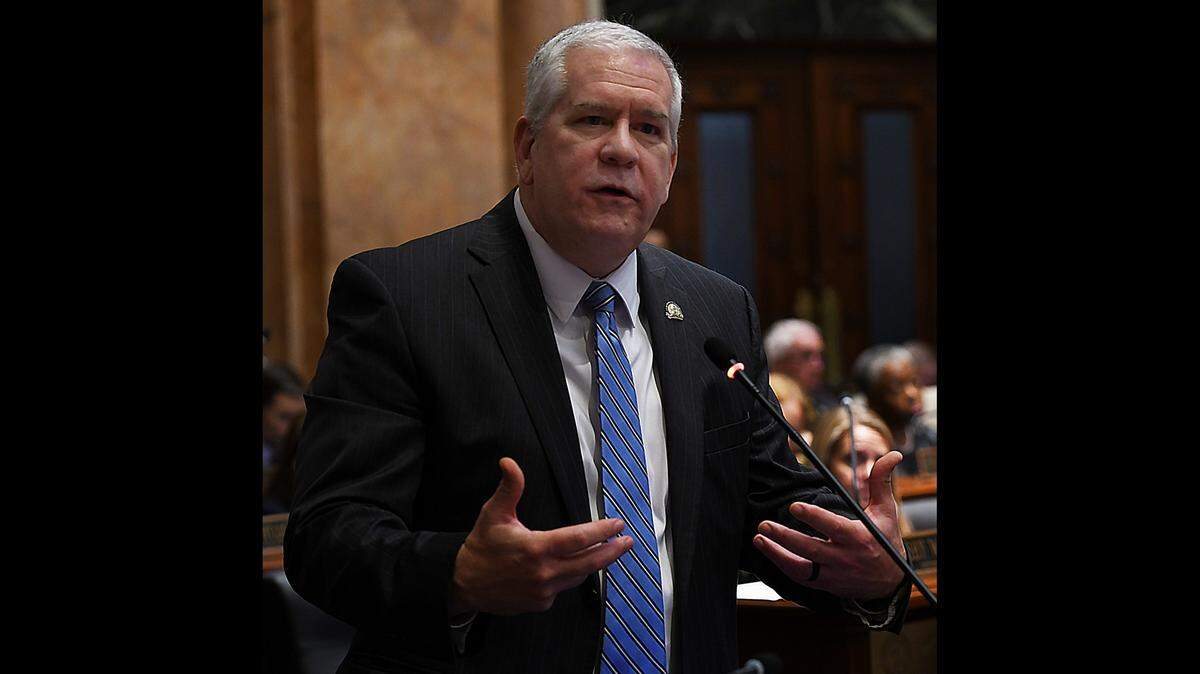
Osborne told the Herald-Leader Monday he believes the House will give House Bill 5 final passage this week and they’re “close” to concurring with the Senate’s changes.
Fish & Wildlife, KY Horse Racing Commission overhauls
Many state sportsmen groups expressed disapproval with Senate Bill 3, which would take any authority over the Kentucky Department of Fish & Wildlife Resources away from the governor and to the Kentucky Department of Agriculture. It was also amended to do something similar with the Kentucky Horse Racing Commission.
Senate Bill 3 passed the Senate on a relatively thin margin. However, its odds in the House might be long if comments from Osborne are any indication.
“Senate Bill 3 doesn’t seem to have gotten a lot of traction. I’m not saying that it’s dead, but there’s not been a very active effort to move that bill along,” Osborne said.
Thayer agreed on Tuesday, and later that day saw passage of a bill through a committee and the Senate floor. His bill would set up an independent, public “Kentucky Horse Racing and Gaming Corporation” to regulate all parimutuel wagering, including historical horse racing machines, as well as sports wagering and charitable gaming.
Fossil fuel power plants
A bill making it harder to close fossil fuel-fired power plants is in possession of the House after Senate passage earlier this month. It would create an 18-member board that would be required to review requests to close fossil fuel-fired power plants before the state’s Public Service Commission can approve or deny a utility company seeking to do so.
Utility companies Duke Energy and Louisville Gas & Electric/Kentucky Utilities have pushed back on the bill while interests in the coal industry have pushed for it.
Osborne said Friday there’s “still a very active conversation” about the bill, Senate Bill 349.
Vaping regulation
Several bills would place new restrictions on the sale of vape products, especially to youths. It’s illegal for anyone under age 21 to buy tobacco or vape products, but as the Herald-Leader reported last year, retailers routinely sell smoking products to minors and face minimal penalties for doing so.
House Bill 11, passed by the House and awaiting Senate action, would require the secretary of state to create a list of businesses that report selling smoking products, including store names and addresses, so state regulators for the first time would have a clear idea of what retailers they need to inspect.
It also would toughen penalties for selling to minors, and it would limit retailers to selling vape products approved by the U.S. Food and Drug Administration.
Senate Bill 344, passed by the Senate and awaiting House action, would require vape product manufacturers to certify information about the vape products sold in Kentucky, including their brand names, product category and flavor. Products would be limited to those authorized by the FDA, and certain images and words aimed at children would be banned from marketing.
And House Bill 142 would allow school districts to establish nicotine prevention and cessation programs for students, as well as disciplinary action for students caught with smoking products in violation of the law, including suspension. The House and the Senate Education Committee have passed HB 142, with a committee substitute, and it’s awaiting action in the full Senate.
Diversity, equity and inclusion in schools
Republicans filed three bills this session to rein in DEI — diversity, equity and inclusion — practices in public education. One has emerged as a front-runner most likely to be passed into law.
Senate Bill 6 was filed by Senate Majority Whip Mike Wilson, R-Bowling Green, and initially proposed limiting DEI initiatives at public colleges and universities by way of “non-credit classes, seminars, workshops, trainings and orientations.”
It targeted “discriminatory concepts,” such as “race or sex scapegoating,” a belief that some individuals are “inherently privileged,” or suggestions that all “Americans are not created equal” in non-credit classes, seminars, workshops, training sessions and orientations for students and staff.
But a new version of that bill, seemingly commandeered by Rep. Jennifer Decker, R-Waddy, would defund and dismantle DEI offices at all public higher education institutions. It would also bar universities from providing any “differential” or “preferential” treatment to a student or employee based on race, religion, sex, color or national origin.
The new contents of the bill — a repackaged version of Decker’s House Bill 9 — was fast-tracked through a legislative committee and the House earlier this month. The Senate has not concurred with the changes made by the House. Democratic Gov. Andy Beshear has signaled a veto, but the Republican supermajority will be able to easily override it.
Senate Bill 93, filed by Sen. Stephen Meredith, R-Leitchfield, sought to prevent public K-12 schools, districts and charter schools from promoting, supporting or maintaining any “programs, trainings or activities that advocate for diversity, equity, inclusion and belonging,” or promoting or engaging in “political or social activism.” It was never assigned to a committee.
University administrators have largely decried Republican efforts to curb DEI at their institutions, including University of Kentucky President Eli Capilouto, who called Decker’s bill “deeply concerning.”
Guns, elections and abortion
With so few days left a number of high-profile bills are almost certainly not getting passed this year.
Abortion exceptions for victims of rape and incest, and for pregnancies with a lethal fetal anomaly — in the forms of Senate Bill 99 from Yates and House Bill 711 from Rep. Ken Fleming, R-Louisville — appear unlikely to pass this session.
Neither bill received a committee assignment. It’s the second legislative since the fall of Roe v. Wade that Republicans have tried and failed to add exceptions to the state’s strict abortion laws.
Called the crisis aversion and rights retention bill, or CARR, by its sponsors, Senate Bill 13 would create a legal pathway to temporarily remove guns from people who are found to be at risk of hurting themselves. Sponsored by Sen. Whitney Westerfield, R-Fruit Hill, and Sen. David Yates, D-Louisville, the bill has been assigned to the Veterans, Military Affairs and Public Protection committee, but has not received a committee hearing.
Following the assignment, Westerfield said the bill likely faced an “uphill climb” in that commmittee, which he found “disappointing.”
The Horizons Act, a $300 million proposal from Sen. Danny Carroll, R-Benton, to bolster the early childhood education sector, has passed the committee chaired by Carroll, but not the full Senate.
Expanded university degree programs — the veterinary medicine at Murray State, doctoral research at Western Kentucky and osteopathic medicine at Eastern Kentucky — are all stalled in the Senate, despite having passed the House with overwhelming support. None has received a committee hearing.
However, Senate Joint Resolution 170 from President Pro Tem David Givens, R-Greensburg, directs the Council on Postsecondary Education to conduct a feasibility study on expanding graduate program offerings at Kentucky’s comprehensive universities.
It awaits a vote in the full House.
This story was originally published March 27, 2024 at 7:00 AM.







.JPG)





%20-1%20.jpg)


.JPG)





.JPG)